

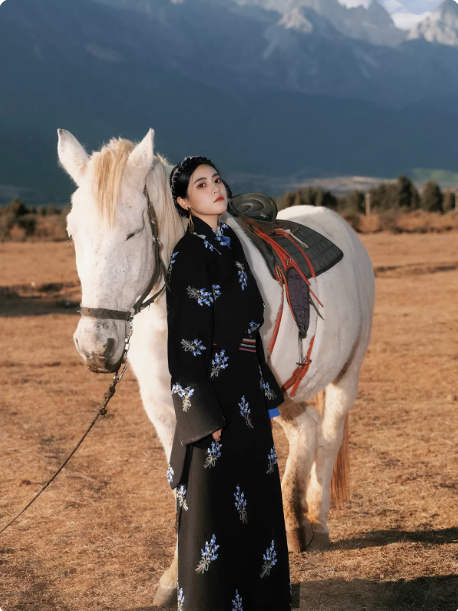
When it comes to traditional Chinese clothing, many immediately think of the elegant Hanfu—the historic dress of the Han ethnic group. But China is home to 56 ethnic groups, each with its own unique sartorial heritage. Among them, the vibrant and intricate Tibetan clothing stands out as a symbol of highland culture. Let’s explore these two beautiful traditions.
🌸 Hanfu: Elegance Through the Ages
Hanfu, literally meaning "clothing of the Han people," dates back over 3,000 years. Its design reflects Confucian ideals of harmony and modesty, characterized by crossed collars, flowing sleeves, and robes tied with sashes. Unlike Western tailoring, Hanfu is often layered and loose-fitting, prioritizing comfort and grace.
Throughout dynasties like the Tang, Song, and Ming, Hanfu evolved in style—from the majestic pao(robes) of nobles to the simpler ruqun(blouse and skirt) worn by commoners. Today, Hanfu has seen a revival among young Chinese, who wear it not only for festivals and weddings but also as a form of cultural expression in daily life.
🏔 Tibetan Clothing: Culture Woven in Color
In the highlands of Tibet, traditional clothing is both practical and symbolic. Made from warm materials like sheepskin and wool, Tibetan attire is designed to withstand harsh climates. Women often wear colorful striped aprons called pangden, which symbolize good fortune, while men don chubas (long robes) with wide sleeves, sometimes lined with fur.
What makes Tibetan dress especially striking is its vibrant use of colors and intricate jewelry. Turquoise, coral, and silver ornaments are commonly worn, each carrying spiritual meaning tied to Tibetan Buddhism. From the braided hair adorned with amber to hand-embroidered boots, every detail tells a story of identity and belief.

✨ A Tapestry of Diversity
While Hanfu and Tibetan clothing differ in form and function, both carry deep cultural roots. Hanfu embodies the aesthetics of ancient Han civilization, while Tibetan attire mirrors the resilience and spirituality of plateau life. Together, they remind us of China’s rich ethnic mosaic—a beauty woven in threads of history, identity, and art.
Whether you’re drawn to the poetic grace of Hanfu or the bold brilliance of Tibetan dress, these garments are far more than just clothing—they are wearable heritage.
#Hanfu #TibetanClothing #ChineseCulture #TraditionalWear #EthnicFashion


